
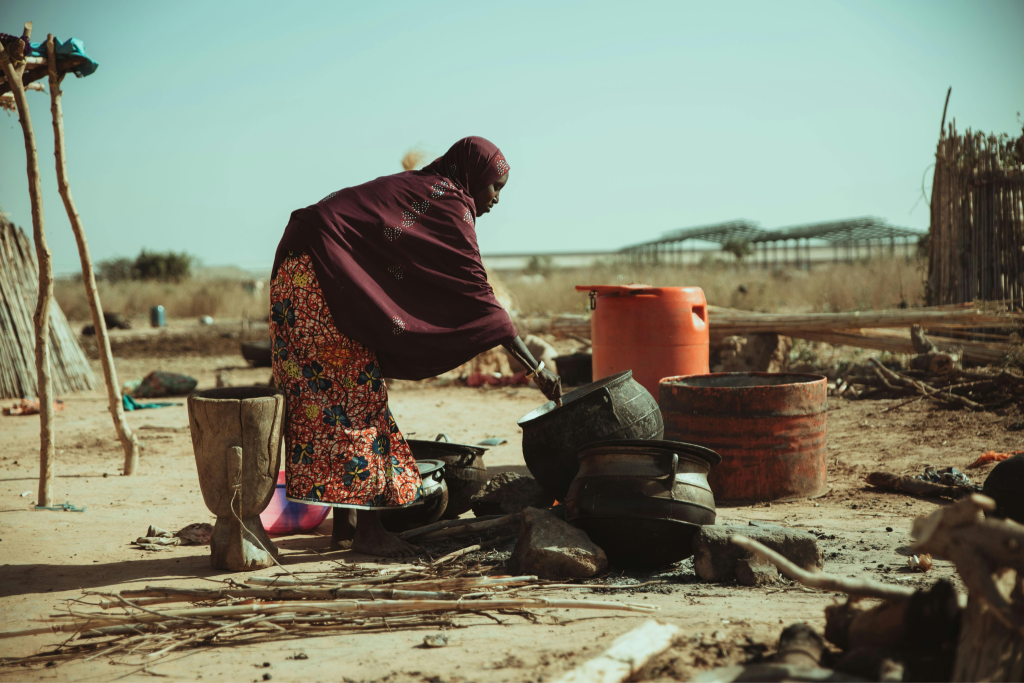
Unpaid care work — cooking, cleaning, raising children, caring for the elderly and sick — is one of the most significant contributions to the global economy. Yet despite this immense value, it remains largely invisible. It is not measured in GDP, not reflected in national accounts, and not rewarded with income or recognition. This invisibility is not accidental. It is a product of systems designed to overlook it. Systems that acknogwledge a woman’s worth with how much she can provide care for others-free.
“Unpaid care work is hidden, not accounted for — and this continues to perpetuate gender inequalities.”
Patriarchy and the burden of traditional roles.
Unpaid care and domestic work are deeply entangled with traditional gender roles. Rooted in patriarchal structures, these roles have long relegated caregiving to women — treating it as a natural extension of womanhood rather than as labour deserving of value. This is not merely historical. It is a present reality that shapes how time, resources, and opportunities are distributed between women and men every single day.
Intersectionality: when inequalities compound
The burden is not felt equally by all women. The intersection of social identities — including race, class, disability, and geography — compounds the discrimination and oppression that women face. A low-income woman in a rural area, for example, may carry a far heavier load of unpaid care than her more privileged counterparts, with even less support and fewer alternatives. Addressing unpaid care work demands that we recognise these layered inequalities, not flatten them.
A web of consequences
The effects of unpaid care work do not exist in isolation. They ripple outward, intersecting with access to employment, public service delivery, gender-based violence, and the exercise of sexual and reproductive health rights. When women are tied to the home by care responsibilities, their economic independence, safety, and autonomy are all diminished. These are not separate issues — they are deeply connected threads in the same fabric of inequality.
Legal frameworks: necessary, but not sufficient
At the national, regional, and international level, legal frameworks exist that recognise women’s roles and seek to protect their rights within the context of unpaid care and domestic work. These are vital foundations. But law alone cannot dismantle structural inequality. Legal frameworks must be complemented by policies and programmes that go further — that actively recognise, reduce, represent, reward, and redistribute unpaid care work.
“Recognise, reduce, represent, reward, redistribute — the five R’s that must guide any meaningful policy response.”
What meaningful change looks like
Real progress requires moving beyond acknowledgment to action. This means investing in public infrastructure that reduces care burdens — quality childcare, elder care, and accessible healthcare. It means redesigning workplace policies so that caregiving is not a career penalty. It means ensuring women’s voices shape the policies that affect their lives. And it means fundamentally questioning who is expected to do the caring — and why.
Unpaid care work is more than a women’s issue. It is a societal issue. It is about gender equality.